Showing posts with label anti-bullying. Show all posts

Wednesday, September 21, 2011

Stop Workplace Bullying Before it Starts

http://www.workplacebullying.org/2011/09/21/stop-workplace-bullying-before-it-starts/

Jane Applegate President & CEO, The Applegate Group Inc.,
September 20,2011

Everyone has experienced a bad day at the office when people are yelling and screaming at each other in frustration. But, if one person is the target of constant verbal and emotional abuse, it can escalate into a troubling case of ‘workplace bullying.’

Many small business owners refuse to acknowledge workplace bullying, preferring to hope the antagonist will eventually stop picking on a targeted co-worker. But, if you do nothing, the situation usually worsens, creating serious health and emotional problems for the bullied worker—and financial stress for employers, according to experts in the field.

If business owners don’t deal with bullying at work, it could result in a violent act. According to the U.S. Department of Justice, about two million violent crimes occur at American workplaces every year.

“There’s a real bottom line reason for business owners to take this problem seriously,” said David Yamada, professor of law and director of the New Workplace Institute at Suffolk University Law School in Boston. “If you are working in close quarters and things are tense and combative, it’s likely to affect everyone’s morale.”

An expert on workplace issues, Yamada authored the ‘Healthy Workplace’ bill, which has been introduced by legislators in 21 states. Currently, 16 versions of the bill—which aims to protect bullied workers from abusers, extending legal protections currently not available to them—are under review in 11 states. Most people think federal employment and discrimination laws protect workers from bullying, but they don’t, according to Yamada.

Being bullied at work makes life miserable. Experts say bullied workers suffer from anxiety, hypertension, depression and other stress-related illnesses. A 2010 Zogby study revealed that about 35 percent of all adult Americans have been bullied and 15 percent of the population has witnessed workplace bullying. The survey was authored by Dr. Gary Namie, Ph.D., and his wife Ruth.

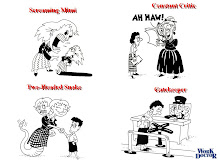
Considered experts on workplace bullying, they have written extensively on the topic and consult with companies dealing with bullying issues. Their newest book, The Bully-free Workplace: Stop Jerks, Weasels and Snakes from Killing Your Organization, provides readers with an in-depth look at the problem and several strategies for dealing with workplace bullying.

“Bullying runs rampant in small businesses,” said Namie. “The owner wants to avoid conflict and doesn’t know what to do. They prefer to tell the abuser and the target, ‘you guys work this out.’”

Namie said he became interested in workplace bullying issues after his wife, Ruth, who is a psychologist, was bullied at work. “Our research shows 66 percent of women who are bullied at work lose their jobs,” said Gary Namie. “Forty-one percent quit, and 25 percent are fired.”

People bullied at work feel trapped—similar to someone suffering from domestic violence. It’s often worse for a bullied worker who feels he or she has to take the abuse because they really need the job, especially during this lingering economic slump.

How do you know if you have a bully in your midst?

“Bullying is a hostile, repeated behavior meant to make people feel badly,” said Carolyn Fedigan, a Boston-area human resources consultant who helps clients deal with bullying problems.

“I’ve dealt with a CEO who would regularly say to his secretary, ‘What, are you stupid?’”

Fedigan said some bullies take a more subtle approach. “They leave people out of communication loops, they spread gossip or single people out for the silent treatment,” she said.

No matter how distasteful it is, business owners can’t turn their backs on the problem. “There is a real financial cost to companies that let this toxic behavior continue, “ said Fedigan. “Bullied people take sick leaves, go out on disability and lose productivity.”

She said many business owners tolerate a bully if the person is a great salesperson or clients love them. “Sometimes the boss is scared of the bully,” she said. “They worry about the cost of turnover, of recruiting and training a new person.”

Business owners have to put their foot down and say, ‘We don’t accept this kind of behavior.” She said it’s important to have a written policy prohibiting workplace bullying. It’s also important to encourage your employees to report any inappropriate or bad behavior. “You have to have the kind of environment where employees can tell the boss what’s happening to them.”

Companies often hire Fedigan to counsel bullies. She works one on one with them, delving into why they are acting inappropriately towards a colleague. “Often, they have no idea they are a bully,” she said. “They think it’s an okay way to behave.”

Consider drafting an anti-bullying policy for your business that defines the problem and then:

Provides a procedure to report incidents.
Includes a ‘no retaliation’ provision.
Encourages employees to report incidents.
Informs employees that violations may result in discipline.

Tuesday, September 20, 2011

Workplace Bullying Is No Bull

http://www.harveymackay.com/column/?p=83

The playground isn’t the only place where you’ll run into bullies. Internet bullying has led to suicides. Office bullying is on the rise, and it’s a deal-killer no matter what business you’re in.

If you think people outgrow bullying behavior just because they get older, think again. Bullies come in all ages, shapes and sizes – and on all rungs of the corporate ladder.

Remarkably, bullying in the workplace is among the leading reasons for employees to seek other employment. Even more remarkably, most don’t list bullying as the reason they quit.

Instead, they suffer in silence and take their talents elsewhere.

And “suffer” they do. Scholars at The Project for Wellness and Work-Life at Arizona State University found “workplace bullying is linked to a host of physical, psychological, organizational, and social costs.” Their research indicated that stress is the most predominant health effect associated with bullying in the workplace: “Stress has significant negative effects that are correlated to poor mental health and poor physical health, resulting in an increase in the use of ‘sick days’ or time off from work.”

Can any company afford that?

In a CareerBuilder survey of over 5,600 full-time employees, 27 percent of workers said they have felt bullied in the workplace. Most of them didn’t confront the offender nor report the abusive behavior. What form did the bullying take? Workers gave these examples:

  • Comments were dismissed or not acknowledged: 43 percent.
  • Falsely accused of a mistake: 40 percent.
  • Needlessly harsh criticism: 38 percent.
  • Forced into doing work that wasn’t really part of the job: 38 percent.
  • Held to different standards and policies from those of other workers: 37 percent.
  • Made the focus of gossip: 27 percent.
  • Boss yelled at me in front of co-workers: 24 percent.
  • Belittling comments during meetings: 23 percent.
  • Others taking credit for work: 21 percent.

Does any of this sound familiar?

Management is responsible for keeping the workplace free of sexual, racial or other forms of harassment and inappropriate behavior. If an issue is reported, reasonable action should

follow. Unfortunately, sometimes the manager is the bully. If that manager has a manager, the victim needs to go to that level. They might be doing the company a huge favor by exposing the reason why so many good people in that department are heading for the hills.

The victims of bullying have to take responsibility – it’s not safe to assume anyone else is aware of the bullying if they don’t report the problem. Bullies are notoriously sneaky. They pick and choose their targets carefully. But that doesn’t mean you’re helpless to do anything if you’re a victim.

Take charge by following these guidelines:

  • Recognize bullying when it occurs. Mild teasing or isolated comments, even if they’re inappropriate, don’t necessarily constitute harassment under the law. Stand up for your rights by all means, but remember that harassment is more than just behavior that’s unwelcome. Technically, it’s behavior that discriminates against gender, race, national origin, or some other legally protected characteristic.
  • Study your policy. Most organizations have written policies that don’t just prohibit harassment but spell out the steps to take if an employee feels uncomfortable. Check out the procedures for reporting unwelcome incidents to be sure you don’t miss any options.
  • Speak up to the harasser. Your first step should be to tell the person that his or her behavior, comments or requests aren’t welcome. In some cases the matter may end there. But don’t hesitate to inform management if you can’t comfortably confront the other person on your own.
  • Document the behavior. Most important of all: Take notes describing each incident to keep details fresh in your memory. This will add credibility to your claim. And keep a record of your conversations with management concerning the problem.
  • Inform management. Follow the procedure for reporting harassment to the proper person. Your own manager is usually the person to start the process with, but if your manager is the one harassing you, you’ll have to go up the ladder to reach the right authority. Document your efforts to report the behavior – dates, times, what was said, and so forth.

Mackay’s Moral: If you’re being bullied, take the bull by the horns before there’s a stampede.

Sunday, September 18, 2011

Dr. Oz, You Docs: How to deal with workday stess, and why you should

http://www.oregonlive.com/health/index.ssf/2011/09/you_docs_how_to_deal_with_work.html

Desk rage. Back-stabbing bosses. Sarcastic and inconsiderate co-workers. This is 9-to-5 reality for way too many people. You may have heard about a new, headline-making survey that says 43 percent of Americans have been targets of workplace incivility. It's easy to guess why: The shaky economy is ratcheting up workday stress for 70 percent of us.

Here are three great reasons you shouldn't put up with it:

1. It infects your home life. Rudeness has a ripple effect. You bring the bad vibes home, and things get tense there. The next day, your partner drags the ill will off to his or her workplace, triggering another outbreak of incivility.

2. It's a health threat. It's pretty easy to get sucked into a cycle of snarkiness, but it sure isn't good for you. Negativity and chronic stress boost your blood pressure and the threat of heart disease and lung problems. Being positive and polite does just the opposite.

3. It's bad for business. Managers and CEOs, listen up. Ignoring a nasty work environment (or contributing to it) costs you money. Workers who've been targets may not tell you so, but half of them waste work time dodging or worrying about the next "attack." One in five says they don't work as hard and one in 10 finds ways to spend less time on the job. Work stress costs the economy $300 billion a year, and plenty of it is "people stress."

If you're stuck in the kind of office that makes the Hatfields and McCoys look like kissing cousins, try these steps to help you rise above the ugliness and bring back respect:

Stage a one-person "good manners revolution." Good manners are a time-tested instruction manual for maintaining dignity and sanity. So respect others. Look for the best in people. Speak kindly. Bite your tongue when you're about to gossip or make a witty-yet-cruel remark about a co-worker. Really listen to colleagues. Do these things, and you'll also forge new connections and give your longevity a boost.

Outsmart the office jerk. Every water cooler has one: the complainer who always sees the dark side. Thanks to "mirror neurons" in our brains that mimic others, this can be contagious. Protect yourself by cutting him or her some slack (maybe there's a difficult situation at home). Consider changing your break time to avoid the verbal toxin. And think upbeat thoughts after a run-in.

Don't excuse it in yourself. Maybe you'd never send a nasty email, yell at a co-worker, take credit for others' work or snub a colleague in the cafeteria. But do you text during meetings? Take the last cup of coffee and not start a fresh pot? Walk away from a copier jam you caused? Snap at tech support because you're sooooo frustrated? Polish up your act.

Find an ally. If there's rampant incivility at work, talk with your boss or have a chat with human resources (especially if you're a target). Bring along this column. Business psychology experts emphasize that real change comes only from the top.

Find meaning in what you do. Work's not easy these days, but renewing your commitment to your job can help you shrug off the ill effects of incivility (and can make you nicer, too). Even if you have to dig, there's satisfaction somewhere in any job. Does it have a positive effect on others? Does it use at least some of your talents, or stretch them in new ways? Is it, even indirectly, helping you reach your purpose in life? And, yes, "purpose" includes earning enough money to raise a family. Or support a passion. Or do good elsewhere. Or retrain for a new job!

The YOU Docs, Mehmet Oz, host of "The Dr. Oz Show" and Mike Roizen of Cleveland Clinic, are authors of "YOU: Losing Weight." For more information go to www.RealAge.com
Related topics: dr.oz, you docs

Saturday, July 10, 2010

Union Support for Healthy Workplace Bill in New York

http://www.wnylabortoday.com/news/2010/07/09/buffalo-afl-cio-clc/healthy-workplace-bullying-law-passed-by-state-senate-continues-to-garner-support-from-organized-labor-while-being-attacked-by-the-buffalo-niagara-partnership-as-harmful-to-new-york-s-private-sector/

Healthy Workplace/Bullying Law Passed By State Senate Continues To Garner Support From Organized Labor While Being Attacked By The Buffalo-Niagara Partnership as “Harmful To New York’s Private Sector”

Published Friday, July 9, 2010 10:00 am
by Tom Campbell

(BUFFALO) – While the effort to have a Healthy Workplace/Workplace Bullying Law passed in New York is continuing to move forward – albeit slowly – the potential new state legislation is continuing to garner additional support from Organized Labor, but is also being attacked by the Buffalo-Niagara Partnership, which calls the measure “anti-business” and “harmful to the private sector.”

New York Healthy Workplace Advocates (NYHWA) State Coordinator Michael Schlicht tells WNYLaborToday.com the bill was recently passed by the Senate. However, the bill was tabled by the Assembly in June, and because of the state’s budget problems, Schlicht now says “the bill will be re-introduced in January.” For the bill to become law, the State Assembly must also pass it, and Schlicht is now calling on those who support the proposed law to personally contact their Assembly representatives and ask they support it.

According to the NYHWA - 1.4 million workers employed across the state continue to try to deal with on-the-job intimidation, mostly from bosses and others in authority.

Workplace Bullying is described by NYHWA officials as inter-personal mistreatment, harassment and/or psychological violence and directly affects - unbelievably, they say - 1 in 6 American workers. Approximately two-thirds of all harassment is "status-blind" and legal, and it poses an occupational health hazard. In addition, too few targeted individuals complain.

New York's Healthy Workplace/Workplace Bullying Bill, meanwhile, substitutes health-impairment for discrimination, and extends protection to all employees, working for either public or private employers, regardless of protected group status, who seek redress for being subjected to an abusive work environment, Schlicht tells WNYLaborToday.com.

Once law, it will be unlawful to subject another employee whose malicious conduct sabotages or undermines the targeted person's work performance, and will punish retaliation of the complainant or anyone who helps the complainant.

“We’re working on several issues within the bill,” said Schlicht of the slow process and taking time to point a finger at the private business lobby in New York State that “doesn’t want it.”

In Western New York, the Buffalo Niagara Partnership – a pro-business group that says it represents nearly 2,500 employers – is dead set against the Healthy Workplace Bill.

In a recent e-mail to its membership, the Partnership – which describes itself as an advocate in Western New York, Albany and Washington for “policies and resources to increase private sector investment and jobs and business success” – listed the Healthy Workplace/Workplace Bullying Bill as an “anti-business initiative” that’s “harmful to private sector investment and job creation throughout the state, and particularly in Upstate New York.”

However, that hasn’t stopped Organized Labor from continuing to step up and support the bill.

Labor Unions have been a solid supporter of the bill, Schlicht said, singling out the New York State AFL-CIO, the New York State United Teachers (NYSUT) and the United Transportation Union, to name but a few. In addition, the NAACP has also issued a resolution at the National level seeking to make Workplace Bullying illegal.

And just recently, the New York State Nurses Association (NYSNA) voiced its support for the bill, Schlicht said, as well as DC 37/AFSCME (American Federation of State, County & Municipal Employees) – which is described as New York City’s Largest Public Employee Union that represents 125,000 members.

In a released statement from DC 37/AFSCME’s Political Action & Legislation Director Wanda Williams, the Union said:

“This bill, if enacted, would afford workers subjected to workplace abuse the ability to establish a civil cause of action against employers that have done nothing to prevent it. This legislation would prompt employers to take more seriously the negative and potentially harmful effects of bullying in the workplace. District Council 37 supports this legislation. Workplace bullying encompasses extreme verbal abuse, hostile actions, and, in some cases, physical violence. Almost 54 % of the time, the employer did nothing – the bully experienced no consequences. Additionally, in 37% of cases reported, the target of the bullying was retaliated against for complaining. Those who have reported are often isolated by fellow employees, experience increased bullying, have been suspended from work, or in some cases, are demoted, transferred, or terminated. An abusive work environment is not conducive to any employer. The Healthy Workplace Bill provides both legal redress to employees suffering from workplace abuse and legal incentives for employers to work towards bullying prevention methods. The enactment of such legislation will help to increase workplace productivity, overall employee morale, and the amount of employers taking steps towards safer work environments. In addition, and as a result, various Health Care costs associated with the treatment of bullied employees will decrease providing for a more competitive state marketplace. On behalf of our 125,000 members and 50,000 retirees, District Council 37 supports this legislation and urges its passage.”

NYHWA's Schlicht said the original Healthy Workplace Bill (A5414/S1823) had been amended as A5414A/S1823A to accommodate a change for Labor Unions, which would allow Union Members to utilize their contract provisions against workplace harassment in those instances where the negotiated collective bargaining language is stronger than the Healthy Workplace Bill. In cases where the negotiated contract language and the Healthy Workplace Bill are equal, a Union Member would have a choice of which option to use, a change NYHWA fully supported.

According to the NYHWA, serious psychological violence, in sub-lethal and non-physical forms, is said to create an abusive workplace and affects the targeted person's health. Demonstrable physical or mental health harm can include shame, humiliation, stress, loss of sleep, severe anxiety, depression, post-traumatic stress disorder, reduced immunity to infection, gastrointestinal disorders and hypertension - which increase the risk of cardiovascular diseases.

The bill would require documentation of such impairment by a physician, psychologist, psychiatrist, and psychotherapist or by competent expert evidence at trial. Currently, the NYHWA says individual plaintiffs must rely solely on private attorneys as New York State has no enforcement role.

The bullied employee is directly liable for the unlawful employment practice, the NYHWA says. He or she is the first one to sue. The employer may be vicariously liable. However, the bill provides ample opportunities for employers to not be held liable when it exercises reasonable care to prevent and promptly correct the abusive conduct, and when negative employment decisions are consistent with legitimate business interests, or the employee's poor performance, illegal or unethical activity. The bill also seeks to compel employer prevention through internal policies and enforcement. No new employer regulations are created, the NYHWA adds. In addition, bullied individuals may accept workers' compensation benefits in lieu of bringing action under this bill.

"When we talked to our elected officials individually, they initially didn't believe us when we told these stories to them and presented them with our information. This has been a multi-year process to get the bill where it is and we have received a lot of Union support. We’re proud of what we've accomplished so far," the NYHWA's Schlicht said.

The 43-year-old Schlicht, meanwhile, painfully knows the repercussions of Workplace Bullying himself and is currently on a second leave of absence from his employer.

"I was bullied on the job and gone on medical leave," Schlicht, who declined to speak in specifics on the advice of his legal counsel, told WNYLaborToday.com a few months back. "I worked for a public employer and suffered psychological harm, including extreme stress, headaches and anxiety. Unless you are physically assaulted, there's really no legal recourse at this time. If I had been hit or punched (by this individual), I would be in a better position that I am in today."

(Editor's Note: For more information on the NYHWA, visit www.nyhwa.org or contact NYHWA State Coordinator Michael Schlicht directly at 716-316-4388)